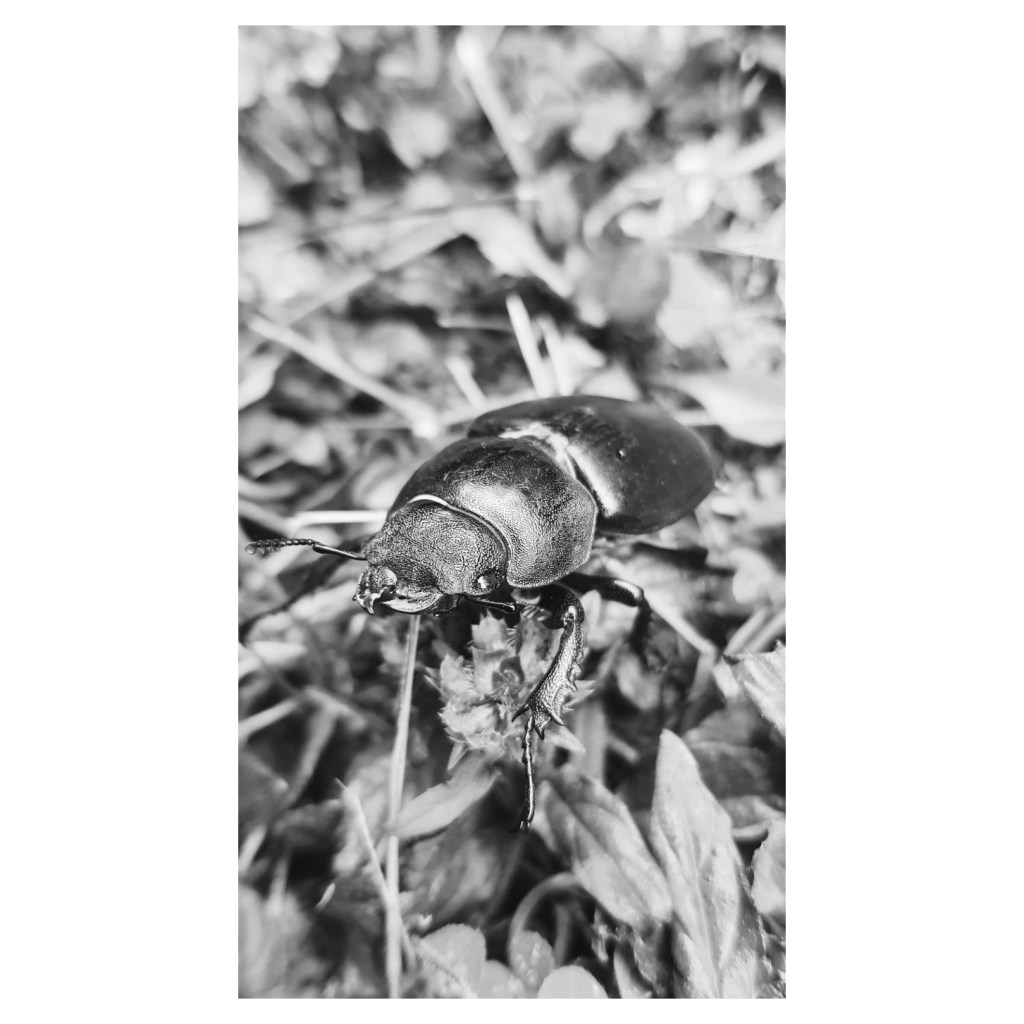
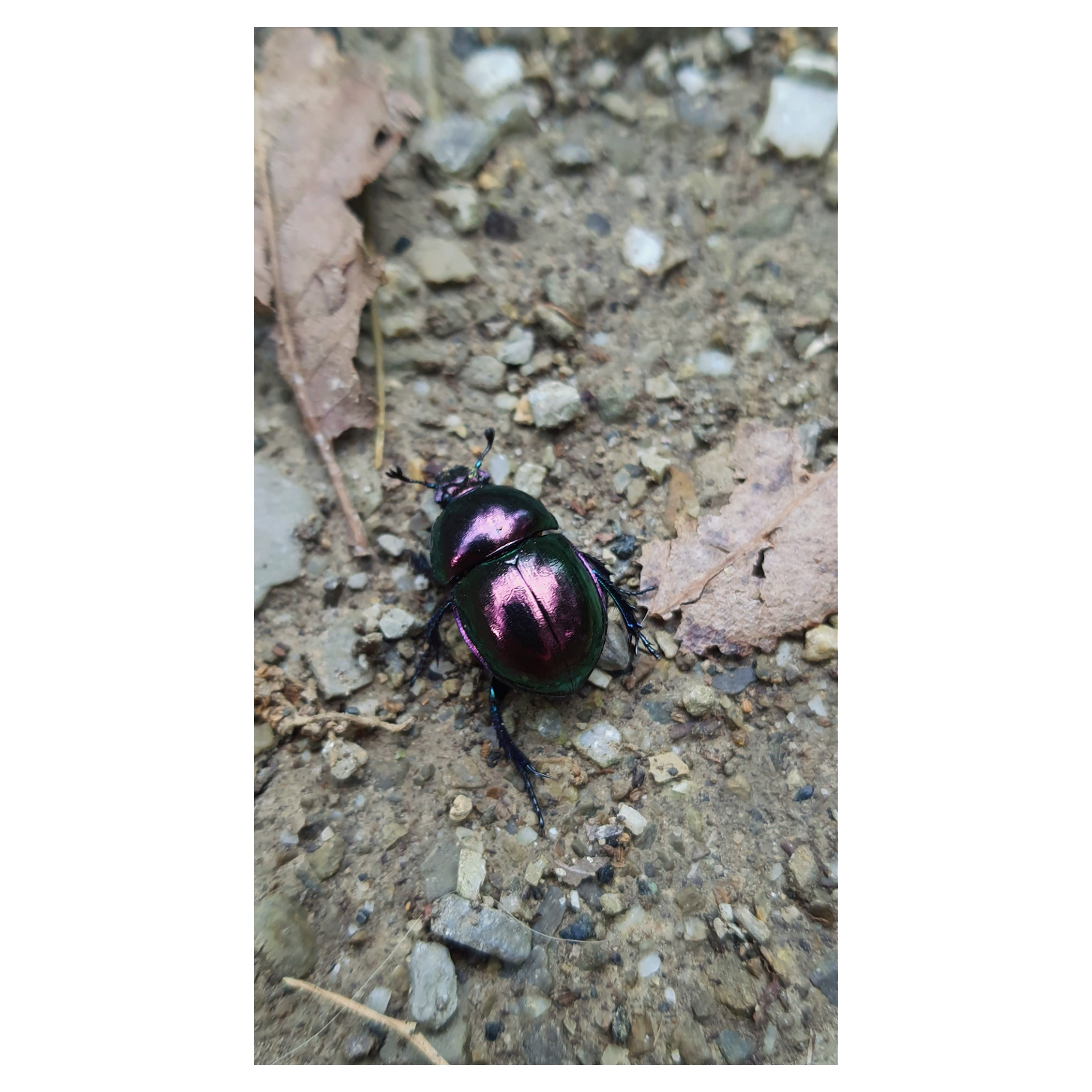
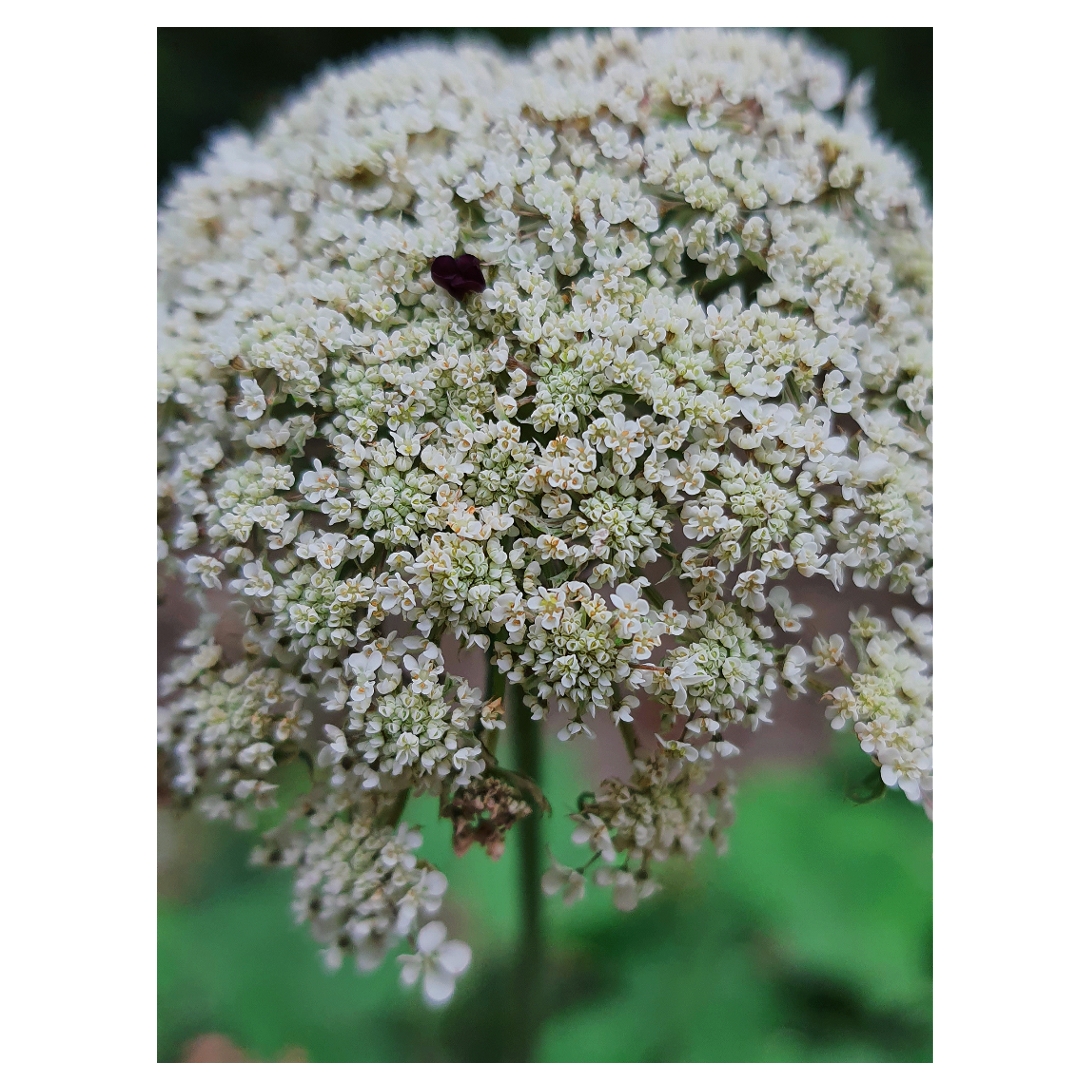
I have been struck by the variety of butterflies, beetles, bees and more here in Northern Italy in a way that I haven’t noticed before. The garden here is made up of a semi-wild, hybrid lawn with two small rectangles of land allocated for a veggie patch and a wild meadow, supporting an abundant insect population. There have been a couple of hair raising moments when iridescent, scarab beetles bomb their way towards me with as much agility as a 10-tonne lorry, but otherwise seeing such a menagerie of small creatures going about pollinating the veggie patch and other wild flowers brings me much joy and has cultivated a great deal of respect for them and a desire to nurture and protect.
Have you recently seen the natural world in a different light and documented them up close? Feel free to share your photos in the comment section below – I’d love to see what you have to share.
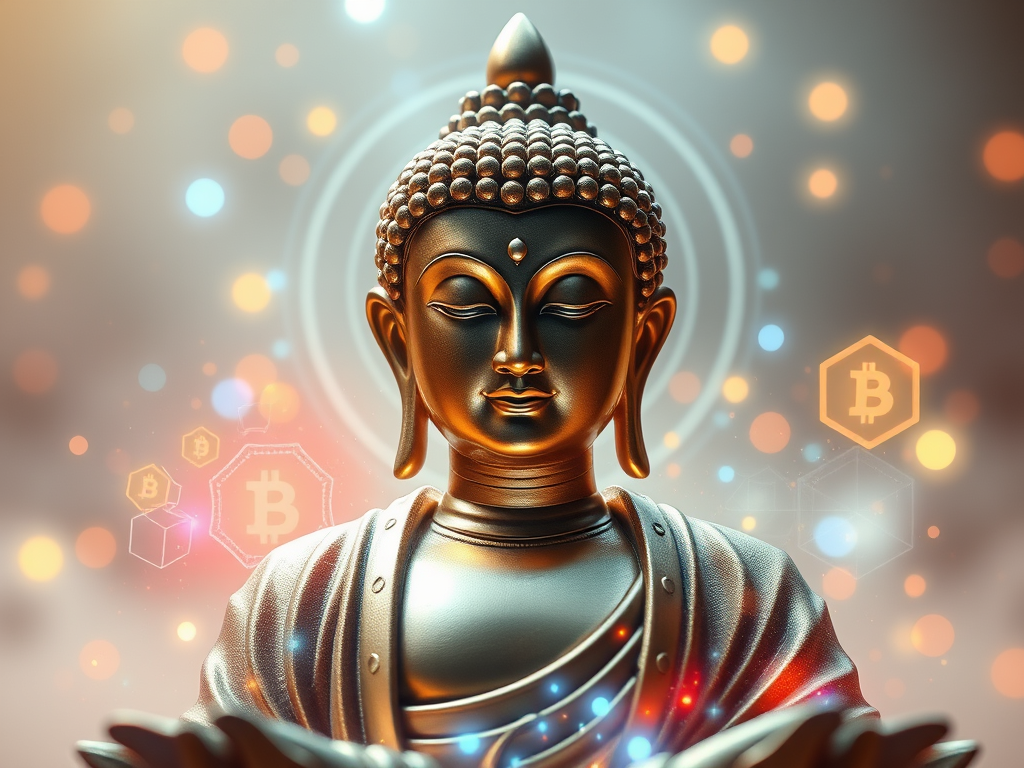
Cryptocurrency and Buddhism are two of my favourite topics currently so you can imagine how my interest was piqued when I came across a news article stating the two had paired in the virtual world.
The cryptocurrency world is still very much a niche one and if your only experience coming across the terms crypto, Bitcoin and NFTs is through traditional media then let me quickly explain what it’s all about.
First we need to start with the term blockchain. Blockchain is a relatively new digital technology designed to act as a ledger recording the movement of money to and from accounts registered on that ledger. In effect it replaces the ledger of a bank bringing it out into the open allowing anyone to read it, should they wish to do so, thereby technically (literally) removing the capacity of dodgy actors from amending the ledger for their own nefarious intentions. In a nutshell, it’s a ledger that removes human naughtiness. There are various types of blockchain out there with differing capabilities and capacities but all built upon that core concept.
NFTs (non-fungible tokens; ie, non-identical tokens) are an asset that have been built onto the blockchain to prove ownership of that asset. So for example, should a person wish to sell their house they could cut out the middle-man and create a contract/title deed on the blockchain ledger. This entry onto the blockchain as already stated, cannot be tampered with and would show very clearly the person whom originally owned it, how much they were paid to sell the house and who has become the new owner, for this reason there is no way the new ownership can be disputed. This new technology certainly has pitfalls but the intention is to avoid scams and fraud and provide a tidy trail of transactions and proof of ownership that everyone can see. In fact, the likes of Rolex are currently onboarding this technology so that on purchase of your brand new Rolex you can check on the blockchain that it is legitimate and not a fake. There even has been talk of trying to quantify Earth’s resources (animals and fish included) and put them on the blockchain in an attempt to provide more sustainable usage of resources and conservation.
Such radical changes can elicit strong reactions from our egos as we look to categorise if the change is beneficial or catastrophic but the truth is we cannot possibly know the future of the path, we can only know the present moment. So, good? Bad? Who knows? Here is a great, old Chinese story of unknown origin to illustrate this.
A farmer used a horse to farm his fields. One day, the horse ran away into the hills. The farmer’s neighbours sympathised with the old man over his bad luck, with the farmer replying, “Bad luck? Good luck? Who knows?”
A week later, the horse returned with a herd of wild horses from the hills, and this time the neighbours congratulated the farmer on his good luck. He replied, “Good luck? Bad luck? Who knows?”
Then, when the farmer’s son was attempting to tame one of the wild horses he fell off and broke his leg. Everyone again sympathized with the farmer over his bad luck. But the farmer’s reaction was, “Bad luck? Good luck? Who knows?”
War broke out in the country and some weeks later, the army marched into the village to draft every able-bodied youth they could find. When they saw the farmer’s son with his broken leg, they let him stay.
Good luck? Bad luck? Who knows?
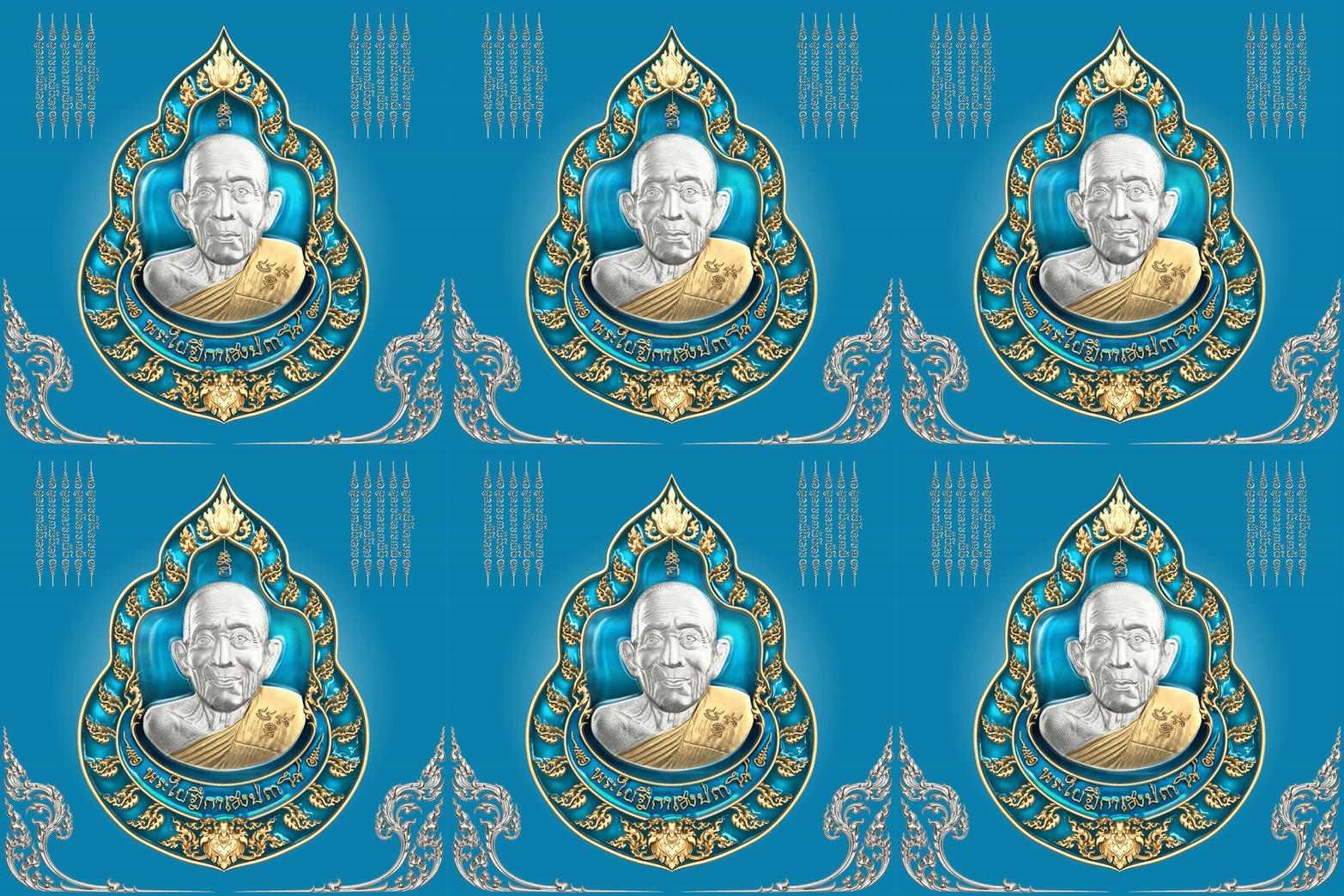
PHOTO: Premium CryptoAmulets NFTs move as the monk smiles. (via CryptoAmulets.io)
Hopefully you’re still with me as I lead you onto how NFTs have met with Buddhism
It was reported, only a couple of months ago, that a new type of digital, Buddhist amulet would be making its mark on the NFT space of the crypto world; the first of its kind.
After being approached by a Thai entrepreneurial business, Luang Pu Heng, a 95-year old monk from Thailand’s Surin Province agreed to create and bless digital, NFT amulets for the company, adding some of his own written blessings and chants before they were uploaded onto the Ethereum blockchain and put up to auction online. There are only 8000 of these amulets available to buy, ranging from a price of 0.02 – 0.8 Ethereum (at the time of writing this is equivalent to $46 – $1870) with varying characteristics and of differing rarities, just like you would see in physical amulets. There won’t have been any exchange of money in the creation of these amulets as Buddhist monastics do not handle money but it can be seen from the website, CryptoAmulets.io that 18% of proceeds will be donated to temples in Surin, ventilators for the hospitals and assistance to those in need.
Thai Buddhist amulets are a type of blessed item made from a range of differing materials, that can offer protection, luck and other types of blessings and chants to enhance your life. The amulets can act as a source of income for a monastery to look after the monks and bhikkunis and ensure the survival of the monastery, yet more importantly than that, it’s a way of transferring the pure, loving energy of the Buddhist monastics to the lay people. In addition to this, the Thai wording written on the amulet has been done so by Luang Pu Heng himself who has clearly, very openly taken this new technology in his stride, setting an example that change is nothing to be feared and something only to be adapted to. There is another angle to this too that is of interest to me and that is the difference of having a physical amulet compared to a digital one. The chanting and blessings made by the monastics transfer a physical resonance to the amulet which you in turn are then exposed to by carrying it with you or placing on the dashboard of your car, for example. This resonance will be of a higher frequency due to the purity of the being who has conducted the blessing thereby bestowing good fortune to the holder. So the thought of having the resonance of the digital amulet very much “living” in your smartphone, and with most of your daily life existing as processes on your smartphone, I can’t think of a better thing to exist in it than the energy of a Buddhist monk. Perhaps it can create more lucky opportunities for those applying for jobs on their phone, whilst warding off scam callers!
Our world is changing rapidly at the moment, from the climate to society, to technology. Some of these changes are frightening, taking us away from the knowledge we have from our most recent ancestors and early-life education and can lead us to thought processes of “it shouldn’t be like this” or, “if we were to do [x], then we could return to [y]” and no doubt leaves you in a state of uneasiness and fear. What I have found to be true, and in keeping with the Daoist philosophy of abiding in nature and the Buddhist philosophy of staying with the present moment, is that there is no space for the ‘shoulda-coulda-wouldas’ only a peaceful existence of what is. This approach has helped me more readily accept the changes to our digital technology evolution, having shied away myself from smartphones and social media.
There is much I haven’t commented on in regards to the actual attainment of these NFT amulets and how they are still only really available to those of you who know how to navigate the cryptocurrency space. However, if you were interested in purchasing one yourself and need assistance with the steps please reach out and I’ll be happy to help. (Disclaimer: This is *not* a sponsored post, I have no affiliation with the company, I am not a financial advisor and I don’t own an amuletmyself more so due to a lack of funds! Make sure you do your own research before making any purchases, as with anything!)
For me though, I personally love the smiling monk looking back at me from the screen and I find a smile crossing my face too and this experience is evidence enough to me that there is something beautiful in this creation.
If you enjoyed this blog then please click the “Like” button, share it with your friends and drop a comment below whether you would purchase a digital amulet versus a physical one. Thank you as always for taking the time to read my blog, I appreciate each and every one of you.
I am currently spending my time in the wilds of Northern Italy surrounded by deer, wolves and large forest hares yet it is the “everyday” weeds and insects that have really caught my eye. If you but take the time to stop and look you will see the incredible level of detail and geometric patterns showcasing the natural spirals that are recreated in Ancient Chinese practices such as Tai Chi and Qi Gong,
Do you feel as though you should always be doing more, or something different? That you should be better? That you can’t quite find the formula to make your life a success?
This has been me for the majority of my life and I’m certain you are no stranger to it either, the inner critic. The monkey mind. The ego. An all so common human condition that leads to a circular and continuous state of suffering. This isn’t exactly reassuring to know if you believe this is the only way to exist, bouncing from one state of doubt and worry to another but what if I told you that this mind-state could be considered abnormal, that it isn’t the state of mind that the mind really wants to abide in. My journey over the last year and a half has introduced an entirely new concept to me, the concept of “no-mind” where doubts and worries are softly let go and a peace and calm descends over your very being allowing you to move through life with fluidity and ease.
After I left university (an experience that baffled me from start to finish), I had concepts of what would happen next. With a little bit of effort, but not too much, I would find a decent paying job, certainly above minimum wage, I would live somewhere I liked (quiet area with a small garden and dry walls) and have enough money left over each month to be able to afford a car and replace my ageing clothes every now and then. My aspirations weren’t wild.
What I found to happen instead, was a far cry from my expectations.
I ended up travelling around the world for a couple of years as I couldn’t find a job in my field of study and I found living in the UK to be as baffling as the university degree that I took in it. Whilst travelling around the world is rarely viewed as a negative experience, a lot of this time was spent in fear and obsessive thought, thinking what on this blue-and-green Earth was I doing and shouldn’t I really be getting a “proper” job? A lot of the beauty of the moment was lost on me and many of my choices were based on “shoulds and shouldn’ts”. This mind-state eventually brought me back to the UK, where struggling to know what job to now pursue I ended up retraining in the fitness industry, scraping by on a minimum wage, working two jobs and being bled dry by the costs of rent and a car. This was a challenging time as I relied upon the support of family, friends and family friends to get by. There wasn’t any feeling of being a successful, independent adult when I was so heavily reliant on others propping me up and left me in almost constant state of confusion and anger.
During this period I tried to control all parts of my life through mental proliferation, where mental proliferation is the process of getting carried away with your thoughts, leading to the creation of more thoughts, more worries, more doubts and a world of suffering. Mental proliferation of the mind focuses on what has happened in the past and what may happen in the future, yet, the one place it cannot exist in is the present moment; the silver bullet to needless suffering. Now, at the time of university, subsequent global travelling and job working in the UK, I had no concept of my mind being the problem; it was my problem solver that got me out of trouble and into jobs. Right?
The world is infinitely complex and beyond our capacity to measure and map-out, it is thus impossible to control. The Daosists have a name for this web of inter-relationships, they call it the Dao. My explanation in itself misses the point as the Dao is, indescribable. A great ancient sage by the name of Lao Tzu famously wrote the Dao De Ching that beautifully puts into words the relationship we have with the Dao, being of the Dao itself, and acts as a framework for how we approach our lives and environment. In particular I was struck by Wu-Wei, a practice of “non-doing” of taking a step back and being more aware in the present moment, of not actively pursuing decision-making.
These concepts are beautiful to read and listen to and feel reassuring, whilst having a depth of ancient wisdom that touches you profoundly. What I found though with having discovered this information was that it still remained very much a mental proliferation, and did little to stop me analysing my life choices. If I was to follow in this practice of Wu-Wei (non-doing) then what was I supposed to be doing?! Perhaps you can see my dilemma.
I was stuck in theoretical Daoism.
That was, until I was introduced to the Buddha’s reflections on the workings of the mind. Now, until recently I hadn’t any interest in Buddhism, I considered it be the “philosophical religion” and didn’t see how it had any particular value or relevance in my life when I was so focused on my work and making ends meet. I had certainly read many a misplaced and out-of-context quote of the Buddha which may have superficially resonated with me but didn’t light a spark to follow it any further. What I have since come to understand is that the teachings of the Buddha are the most well understood teachings of the workings of the mind, that on discovery of these teachings I have been baffled as to why modern psychology exists at all.
The Buddha illustrates through stories and lists why the mind behaves the way it does (such as the mental proliferation of desire; making choices because you desire something and you want it and making choices because you desire to get away from something you dislike) and what the different results are based on how you approach a situation. However this approach is not analytical such as the way in Western Psychology, instead I see it more as a reprogramming, a reconditioning based on the Four Noble Truths and the Eight Precepts and so on that sets you on the path towards enlightenment and the end of suffering. These teachings help develop wisdom and the ability to reflect on the workings of your mind whereby you are no longer plagued by doubts, desires, hatred and more.
There is a trap here too however, just as in theoretical Daoism you can become stuck in theoretical Buddhism, which is why I was also taught the practical mind skills too, otherwise known as meditation. I’m not so sure that meditation compliments the Buddha’s understanding of the mind as much as it is the practice of the Buddha’s understanding of the mind. To forgo meditation in the belief that simply reading the written word will help you does not lead to the life-changing insight that is possible. Meditation is immeasurable despite what some technology groups may be trying to achieve today. I have heard people talk about entering into Jhana states and Buddhist monks who can meditate for hours or days at a time, yet meditation cannot be measured in terms of success by the experiences you have as much as how much you have let go in day-to-day life. My meditation practice has been far more basic, I typically sit for 30 minutes with nothing otherworldly happen, yet I do find myself enter into a more peaceful state where mental proliferation dies down and those immediate, loud thoughts slowly soften and dissolve.
This regular practice has been enough to slowly drop the notions of being a somebody that strives to make something of themselves in the world and to quieten the inner dialogue. This is turn drops the ideas of “I should be doing this or that”, “I should be here or there”, “will people still like me if I do this or that”, “I need to go out and save the world, but how?!” and has brought me closer to a state of Wu-Wei that I had previously tried to access through the thinking mind.
In time, this has led me to pursue awareness in the present moment above all else. Awareness itself does not hold as much theoretical or literary prowess, it’s not as exhilarating to read or hear about, yet, it has been the most powerful transformational tool I have encountered to date and can be harnessed and refined further through meditation.
I have found that when I am in this present moment, my mental proliferation subsides or simply doesn’t exist. I note that the present feels like “this” and this liberates me from the notion that there is any path to follow other than my own.
In Buddhism we can find advice on how to live a noble life as we embark on a path towards enlightenment. Regardless of your belief system these teachings can assist in bringing clarity towards your intentions and actions in life and can aid in shifting delusion, ill will and greed by stepping away from egocentric practices. Through this focus one can generate greater compassion and an appreciation for life “as it comes” rather than as “it should be”.
The Buddha talked about Dana (The Perfection of Giving) in relation to the teaching of ‘The Six Paramitas’ or ‘The Six Perfections of Character’ (there are 10 listed in Theravadan Buddhism). The Six Paramitas are the perfection of giving, morality (proper conduct), patience (or tolerance), effort, meditation and wisdom (or discernment) and are to be cultivated if we wish to move away from suffering towards peacefulness and happiness.
Dana : The Generosity of Giving
The Perfection of Giving is considered to be one of the first Paramitas to be developed as it develops the skill of metta (loving-kindness). As we develop greater metta we awaken our hearts furthering unconditional giving and selflessness. It is important to highlight that being the giver and being the receiver are of equal importance in this interaction. The Western awkwardness of “politely” rejecting gifts whether they be material, time, money or work, does not allow for a harmonised experience of giving and receiving. This conditioning of politeness can show us how far our conditioning can throw us from peaceful living. By denying a person the opportunity to give, we deny them the joy of giving and developing their metta further.
Giving and receiving arise as one, you cannot give without having a receiver and you cannot receive without having a giver so both sides must be respected in equal measure.
A personal experience of caring and rearing two wild-born black rats from the age of 1-week old to 6-weeks provided me with my first taste of selfless giving. In their pure innocence and vulnerability of needing to be cared for in order to survive, they gave me my first real taste of selflessness and the pureness and joy of giving.
To be accomplished in The Generosity of Giving can be expected like so:
“What is accomplishment in generosity? Here, a noble disciple dwells at home with a mind free from the stain of miserliness, freely generous, open-handed, delighting in relinquishment, devoted to charity, delighting in giving and sharing. This is called accomplishment in generosity.”
AN 4:61, NDB 450
The Eight Reasons For Giving
The Buddha mentions eight reasons that we may give a gift and these eight reasons can be interpreted as moving from lower levels of awareness filled with greed, delusion and hatred towards higher levels of awareness that bring us closer to our enlightened selves. These are as follows:
1. One gives a gift from desire.
2. One gives a gift from hatred.
3. One gives a gift from delusion.
4. One gives a gift from fear.
5. One gives a gift based in mental conditioning and obligation, thinking, ‘Giving was practiced before by my father and forefathers; I should not abandon this ancient family custom’.
6. One gives a gift in consideration of good kamma in the next life, thinking: ‘Having given this gift, with the breakup of the body, after death, I will be reborn in a good destination, in a heavenly world
7. One gives a gift for the purpose of joy, thinking: ‘When I am giving this gift my mind becomes placid, and elation and joy arise.’
8. One gives a gift for the purpose of ornamenting or beautifying the mind and increasing the skill of metta.
As you move down the list of reasons for giving, the giver becomes less and less identified with themselves as an individual needing to accomplish something in life and more in tune with the wholesomeness of the practice where the giver and receiver are one. As we develop this practice we move away from expecting outcomes from our gift giving realising that the act of giving is to let go of the ego rather than to fuel it further.
The next time you find yourself involved in the act of giving, give yourself the opportunity to reflect before, during and after on the above points. Perhaps you can identify the intention behind your gift giving based on one or more of the points. Where possible avoid rational thinking and reasoning from taking charge and instead be aware that this action is resulting in mental proliferation (trying to “figure it all out”). Be aware that the act of giving felt like this and trust in the present moment awareness where no action is needed to be taken and the awareness itself is all that’s needed.
If you found this to be helpful or of interest please like, subscribe and share and drop a comment down below and thank you for taking the time to read!









 TheForceOfDao