Category: Life Lessons

  • “They Pushed Me Away”, and Other Disturbing Beliefs.

    “They Pushed Me Away”, and Other Disturbing Beliefs.

    When a thought hurts, that’s the signal that it isn’t true. – Byron Katie

    You’ve just had an argument with a loved one. They’ve said or done something that you vehemently believe pushed you away. You feel so upset that they would hurt you like that. Why won’t they let you close?

    Perhaps this sounds familiar.

    You’ll hear people advise others on hearing such a story, that he/she “pushed you away”, and you believe it. You feel powerless. How are you ever going to reach them? It feels like a gulf between you two.

    But!

    Have you ever considered that this interpretation is a complete fabrication? That you’ve simply believed this judgement only because others have told you that is what’s happening without ever having questioned it for yourself. What does it even mean when someone pushes you away – is it even possible?

    So for just for a moment let’s consider another possibility. Perhaps there’s another perspective, an opposite to the original belief.

    If you find this resonates with you, I encourage you to follow along with your own scenario where you believed this thought and see what arises for you through gentle inquiry.

    How do you react?

    What happens when you believe the thought, “they pushed me away”?

    If I put myself in the shoes of someone who believes the thought, I would see the other as the “problem”. I believe they are rejecting me, and it feels so painful. They are the one making it difficult to connect. I’m wanting them to be different from what they are, and my thoughts take on a need to change them in order for me to feel connected to them. I criticise their faults in my mind and use that as ammo to prove the belief is true.

    I pull away from them, making myself the victim. I don’t want to express my own vulnerabilities around a person that’s hostile. Comparisons arise in the mind where “I” am better than “them” because they are the aggressor, and I’m the victim. I don’t see my own role in the exchange.

    I feel anxiety in my chest, a constriction in breathing, and the fear of not being close to this person.

    Who would you be without the thought?

    This is an invitation to see who you would be in the same situation without the thought. What might you say or do that is different? This is not intended as an intellectual exercise to change how you behave next time, only simple inquiry.

    Without the thought, I would see someone who is unable to express their emotional state with clarity in that moment. I feel compassion towards them, which immediately brings me closer. I’m aware I’m not actually too sure what it is they’re going through, so I notice curiosity arising in me. Rather than assuming I know what’s going on, I question what’s happening. I feel it’s possible to ask whether I’ve understood them correctly but sharing what I understood them to say. I don’t feel so threatened by their words and behaviour, I can feel more space in my own mind to hold what’s going on for us both. It feels more peaceful this way.

    Rather than rejected, I feel connected.

    Turnarounds

    The turnarounds are a way of exploring whether the opposite is as true as, or truer than the original statement. It is not intended to disqualify the original statement, simply an invitation to try on a different pair of shoes and to see if there’s any truth in it. Such an inquiry can provide profound insights into how beliefs shape our entire world view.

    They didn’t push me away

    I might have interpreted it that way, but I can not know what is going on in their mind. It’s a form of violence to infer intention onto their behaviour. If anything, it causes them to push back.

    It is actually impossible for another person to push me away, only I can believe that onto their behaviour. It is a choice from my side to “be pushed away.”

    It could be that they are hurting and don’t have the emotional intelligence and capacity to express themselves clearly in that moment. What’s more likely is that their behaviour is a cry for connection and love but unable to express it.

    I pushed me away

    I pushed myself away by believing my own thoughts around the intention of their behaviour. I hurt myself in the process and ended up feeling rejected.

    I created distance between myself and the other by interpreting them as the aggressor. I closed down my heart and put up defences to protect myself against the perceived threat.

    All of this takes me away from the present and from the inherent goodness that resides within.

    In a way, I pushed myself away from what felt good internally by the beliefs I held in that moment.

    I pushed them away

    It is useful to reflect upon our own behaviour in the scenario, not as a way to become self-critical and self-flagellating but as a way of waking up to our own reactions.

    It could be that in that situation, I push them away by judging their behaviour as hostile and confrontational, inferring intention onto them, thereby creating distance between us.

    My mind may run off into the past, recalling similar situations and projecting into the future that this is how this person is, and will always be. I make them solid and unchangeable.

    When I’m in my mind I am not present with the person before me and I stop listening to what it is they’re trying to communicate to me – I am caught in the stories in my mind.

    I might notice that I am hostile in my own way by no longer engaging with them from a place of care and understanding.

    I check out, deciding that as far as I’m concerned, the conversation is over. That makes it very hard for them to re-connect.

    There’s another turnaround that I will leave for you to investigate, “they didn’t push me away”. How might that be true in that situation? Please leave a comment down below on any interesting insights you’ve had as you followed along.

    The truth is that we all want to feel heard and understood by others, especially loved ones. Sometimes, without realising it, disconnection arises when we infer meaning onto a person/event that is otherwise meaningless. By learning how to inquire into stressful beliefs, one can become more aware of how these beliefs stop us from being present and seeing life with clarity.

    We begin to awake to the dream.

    If you’re enjoying what you’ve read of this series so far, let me know in the comments what common expression or judgement you’d like me to question next.

    Thanks for reading!

  • “Aren’t You Just Running Away From Your Problems?”, and Other Disturbing Beliefs.

    “Aren’t You Just Running Away From Your Problems?”, and Other Disturbing Beliefs.

    I want to do a short series on “those” sayings, the ones that have you doubting your next move and questioning your own agency. The “moving country won’t solve your problems”, “you have to pick a side otherwise you’re supporting the oppressors”, or, “she pushed me away”, or a ironically toxic belief, “he/she is so toxic, I should cut them out of my life”.

    I want to start off the series with a particular stickler for some, “moving country won’t solve your problems – you’re just running away”. One that has been a pain point for me at times in the past.

    If you’ve ever believed that thought, how does it leave you feeling?

    I know for myself if I think back to a situation where I considered moving country and I believed that thought, I would break out in a nervous panic so afraid that I was getting life “so wrong”. How was it that others were seeing that I was avoiding my problems whereas I was seeing that I was trying to save myself – how could I be so mistaken? Why was I not allowed to save myself? I began to doubt my entire way of Being, how could I now trust myself in anything?

    What ended up happening was that I became stuck in a limbo, unable to take action, so afraid that others would now judge me to be someone who couldn’t face difficulties in their life. Not only that but I wanted people to admire that I was someone who faced difficulties head on and didn’t “give up” (that will be a belief to investigate at another time).

    It was too shameful to leave.

    I developed anger towards myself for being in the situation I was in and not being able to escape it. The anger actually a deep fear of never being able to leave – I created my own prison cell without realising it, stuck in a shadowland.

    The belief didn’t serve me, all it offered was stress. I can see that by believing it I was avoiding taking responsibility for my life. Not in a way that was conscious but in a way that taking a stand for myself and to buck the trend was too scary to even comprehend. If I first checked with others, whether that be with people in person, or seeking advice online, I presumed they knew better than I. I put down my own intuition and experience in favour of those who had never spent a day in my shoes. I truly believed they were right and that everything within me was inherently wrong.

    It became an internal battle of debating the pros and cons and I could feel a wall of worry build up that action needed to be taken but I was stuck in analysis paralysis. Thinking, thinking, thinking.


    Much has changed since those days. I took up a Buddhist practice, meditation and “The Work”, and with it more awareness now surrounds the stories whirling through the mind as it attempts to understand, and bring meaning to the world.

    Bringing awareness to stressful thoughts allows me to see more clearly how I interact with the world through that belief. I’m not interested in changing how I behave so much as simply being aware of what’s going on, waking up to the dream.

    If I put myself back in that past situation and just consider who I would be without the thought that “moving countries won’t solve my problems”, I am back to trusting the direction that I am headed, to trusting myself and noticing what feels intuitively “right” for me in that moment. I feel a little more confident that I can trust that the situation I am in is not serving me, not nourishing my growth or enabling a peaceful state of mind.

    I don’t feel anxious about being judged by others for moving. Their judgement is only based on their perspective of my situation, of which they will never have the full story. Rather than being in the business of others, trying to work out if they approve of me or not and behaving in a way that I think will make my actions worthy of appraisal, I’m back in my business – the only place where I can ever feel peace and joy. I can choose to welcome other’s judgement of my actions as a point of self-reflection and, I can also use their judgement as a way of strengthening my own resolve and trust in my intuition. It’s very likely that someone judging another as “moving on and running away from their problems” is struggling with the same beliefs in their own life and is deserving of compassion as much as myself.

    I don’t feel a fear of what comes next and there is no longer a weighing up on the pros and cons in an attempt to guess at the future and whether it will be a successful venture. Nor is there a fear of the move not working out – I feel more at ease moving to the beat and rhythm of life.


    “Moving Country Will Solve Your Problems”

    It’s worth turning around the original statement and seeing if it’s as true as, or truer than the original belief.

    Feel free to take a pause here and see what examples come up for you where, “moving country will solve your problems”.

    I can see that the situation I was in had worn me down – I was depressed, lonely and there was no spark of joy residing in my heart, I was leading a robotic, unaware life. Therefore, a change, a move to a new country could provide new opportunities, enabling me to discover what I’m truly interested in, it could open up the social pool to potentially connect with more like-minded people, as well as potentially leaving me feeling more connected to myself. Moving to a new country would most certainly lead to personal and spiritual growth, something that had actually stagnated in the situation I had been in.

    Putting myself in a new environment could be like taking a stunted plant lacking in vitality and putting it in soil, rich in fertiliser and moving it out of the shade and into the sun. Sometimes all that’s needed is space, time and a fresh perspective.

    Living a good, wholesome life does not mean one must remain in a fixed situation for a lifetime – it’s about being adaptable and learning to hear the voice of the heart, of intuition. As with all things, it becomes weaker with a lack of practice, yet with dedication one can start putting a little more trust into what life calls us to do. Perhaps first with judgement and then eventually, with enthusiasm, joy and a profound trust in life.


    “You aren’t running away from your problems”

    There is another turn around to investigate here for, “you are running away [from your problems]”. It can be turned around to, “you are running towards your problems”, or, “you aren’t running away from your problems”. I will leave that one for you to question and see what arises for you from inquiry.

    If you do choose to take me up on the offer, just remember that you are investigating your own experiences and truth, not that of others.

    Thank you for reading!

  • Audentes Fortuna Iuvat

    Audentes Fortuna Iuvat

    Fortune favours the brave.

    Perhaps you’ve noticed that the world that exists today is radically different from 100 years ago!

    At that time, the only mode of in-absentia communication was the written letter. There were no TVs, devices, or screens to invite strangers into your bedroom upon waking each morning. Now you have photos and snapshots of their daily lives to which you can compare yourself to their filtered and curated portfolios. Now, with the introduction of AI, we enter new territory of hyper-content. Articles and posts are either entirely written or edited by AI before publication, and everything reads the same. Posts jump out at you as SEO-hyper-charged titles lacking any wit or character to differentiate one author from another. I am by no means anti-AI or tech, however I am aware of how it dilutes my creativity when it comes to writing, art, and living itself.

    Do you know there is a scoring system for how easy this article is to read? I am encouraged to make it easier to get more views – it’s not difficult to see how this ends up. I am even encouraged to be more assertive in my vocabulary. To not come across as unsure even when the truth is that life is completely uncertain – ironically, something I am assured of. Have you ever found yourself wondering how it can be that people seem so self-assured online as if speaking with absolute authority about what “problem” it is you’re suffering from?

    And so it is that I notice my proclivity to want to conform to the “algorithm” and to be able to compete for attention with such players in the hopes it brings financial prosperity and opportunities. But to what end? The world as we know it now appears to be a result of the majority wanting comfort at the cost of spiritual practice and wanting ease at the cost of growth, and it appears to have led to a more violent and impoverished world.

    Therefore, I resolve to accept my creative personality quirks that don’t allow for consistent content. That I may currently lack the structure that makes this writing coherent and punchy. I certainly don’t wish for my readers to “take an action” following reading my blog – why should I presume you, the reader, take anything away from what I write?

    It seems to have been forgotten that creativity and by extension, the heart has it’s own unique expression and timing and cannot be quanitified and comodified if one truly wishes to live from a place of open-heartedness. I am sure many of us still relish the bold, the brave, and the beautiful when it comes to self-expression, for it is unqiue and irreprecable.

    The world we wish to live in exists only in our minds and by contrast, the world we don’t wish to live in also exists only in our minds. You get to decide which world to live in, and act accordingly.

  • Trust Your Own Path

    Trust Your Own Path

    There is no one else like you. We’re all unique, shaped by different experiences—even within the same family. Considering just the birth order of children alone has a profound effect; the first-born meets parents stepping into the unknown, often wrapped in fear or overprotection. The last-born finds parents seasoned, more confident, perhaps freer to let mistakes unfold. Our conditioning carves distinct paths from the very start.

    It’s tempting to cast our eyes around, to measure ourselves against others—gauging how far ahead or behind we appear, based solely on what we can see, hear or touch. We pour time and money into questioning whether we’re on the “right” path, aching to know for sure. And when we convince ourselves we’ve strayed, we suffer deeply—as if we could ever be anywhere but exactly where we are!

    What if it’s impossible to stray from your path?

    Imagine waking up, brewing a hot cup of tea, and truly feeling that this—right now—is what you’re called to do. For most, it’s a fleeting pause before the mind races to “bigger” things. That’s where we lose ourselves. We fixate on grand moments—those rare, fleeting peaks that claim so much of our thoughts, and time—while the small, daily actions slip by unnoticed. Yet those seemingly, insignficiant moments hold the greatest power.

    As I write this, I trust the process. This is my path in this moment, I don’t need to worry about where I’m going next. It feels like my whole life has led me here—not because of what this blog might become, but because of what I am doing now. It could flop, gather dust, or be dismissed as trivial by others. That doesn’t matter. The act of writing it is mine, and that’s enough. If we could see more moments this way—the seemingly small acts of brewing tea, walking, breathing, making the bed —we’d start to feel a deep appreciation for life. It becomes magical. Wonder creeps in when we stop chasing something better and simply witness what’s here. It doesn’t mean you stop living life. I still take action, but I’m not trying to escape in my mind to a “better” place. I trust that everything is my path.

    There’s a phrase I’ve heard: “You’re not on your own path.” It’s often aimed at someone caught in habits or choices that don’t seem to serve their highest good, and it is usually served up by worried and concerned friends and family. It is however a judgment, an assumption that one person can play God and know what’s best for another— it wrongly assumes that we can just pick a new path like it’s a coat off a rack. I see it differently. Every step you’ve taken is your path: the friends who fed bad habits, the job that broke you down, the extreme sport that pushed your body too far and broke it. Each choice, each stumble, has been a teacher, giving you exactly what you needed to grow, to overcome, to soften, to let go. Believing you’re “off” your path is disempowering—it whispers that you’ve made a wrong turn, that someone else could’ve done it better if they were living your life. No. You’re exactly where you need to be.

    This doesn’t mean staying stuck in harmful environments. Being on your path isn’t passive—it’s active, alive. It’s about moving forward without being shackled by limiting beliefs about what’s possible. Trusting your path means seeing every moment as yours, every lesson as necessary, every challenge as an oppprtunity for growth, and every small act as a thread in the tapestry of your life.

    If you want to continue following my journey and finding out how to question limiting beliefs, consider subscribing to receive notifications of when posts go live.

  • What is “Project : JourneyHome”?

    What is “Project : JourneyHome”?

    At its core, Project: JourneyHome is my way of documenting the process of finding my way back to myself at time of much uncertainty. It began as a quest for a literal home—a destination at the end of a voyage, much like the hero’s journey. But, as with any true journey, I’ve come to see that the external only mirrors the internal.

    Within us all is a calling, one that many of us cannot hear. Some people hear these in childhood, and for others, they come later in life. It’s not something that the mind can decide, it’s a matter for the heart.

    Age is certainly a relevant factor in wanting to settle down, yet for each of us, this process is unique—a different calling, a different path. To me, this project is about recognizing that we all carry these callings, sometimes tucked deep within not having been heard in a long time. It’s about learning to stop, to let the mud of the mind settle until the water clears, revealing what’s true for us. When we think too much, emotions churn, and the noise of the mind drowns out the stillness required to hear our hearts.

    We convince ourselves, and others that purpose is something to be chased with thought, but I’ve found it’s not the mind’s job to uncover it. Instead, it’s in the quiet—in the presence—that purpose whispers. This takes practice, a skill we’re all capable of and were in touch with as children.

    The home I seek outside only takes shape after the one within is at peace.

    Within us all lies a need to feel accepted, to be at peace in our own lives. Symbolically, the home reflects this: a place of safety, nourishment, and family, where we cultivate our hearts to love those closest to us—and then the world beyond.

    My Process

    Where do I begin? How far back do I go to show you where I stand now and how I’ve come to see life? For me, it’s only recently that I realized I’ve had a dream all along. As a teenager and young adult, I suffered from not knowing what I wanted, believing I didn’t have a dream. Without a dream, my life lacked direction and purpose. My mind spun endlessly, trying to figure out what I should be doing. Nothing seemed to fit. I saw others walking their paths—leaving university for jobs, traditional careers, digital nomadism, freelancing, entrepreneurship, infleuncers… I don’t dismiss these roads; they’re all valid, all needed. But my heart doesn’t sing.

    Then, something shifted recently. I can’t pinpoint exactly when, but I remembered a childhood dream: to live in Africa. Growing up, I’d heard stories from relatives who’d been there, watched films like Born Free that set my heart ablaze. Every Christmas and birthday, I begged my mum for a lion cub. Of course, I was disappointed each time she didn’t deliver—though I can’t blame her for not producing a wild animal! At some point, that dream faded. I don’t recall being talked out of it; it wasn’t that overt. Instead, I think society’s conditioning—school, the push toward university, jobs, and city life—funneled me into believing Africa was for “special” people, other people, not me. I never questioned why I couldn’t go; the belief just settled in, a quiet limitation I didn’t see.

    Recently, though, it dawned on me: that dream never fully disappeared. For nearly five years, I’ve been exploring my mind, drawing from Buddhist teachings about desire—how it can overtake us, how we refine it to know what’s true. There’s a difference, I’ve learned, between a fleeting craving and a deep calling. A desire—like wanting ice cream and then sulking when the shop’s closed—is impatient, overpowering, blind, it draws us into suffering. But a childhood dream? That’s gentler. It arises again and again, patiently calling out to be fulfilled. Some might call it God’s voice, the universe’s nudge, or a purpose etched into our DNA. Every cell feels drawn to it. Ignore it, and it’ll return—sometimes loud, sometimes soft. I’m learning to come to trust these callings. I don’t overthink them so much anymore—why this one? Will it succeed? Is it needed? All I know is there’s a loose end to tie up, and when it’s done, the mind lets go. I don’t even know when the mind will let go, it’s always mystery and it’s none of my concern.

    Rediscovering the Dream

    This dream—to go to Africa—isn’t about fame or fortune. It’s about listening to the inner child who’s been whispering all along, thrilled that I’ve finally heard her. “Yay, thank you!” she says. It’s taken a long journey to reach this point, shaped by moments I’ll share as this unfolds. Some people know their dream early and pursue it; others, like me may have buried it, dismissed it as childish, put it off, or forgetten it entirely. And that’s okay—there’s no one right way, sometimes many other lilfe circrumstances need to fall into place first before we’re ready. What matters is we don’t compare our paths. Each of us has unique lessons, a personal combination to unlock our hearts.

    This is where Project: JourneyHome begins. If you’re curious to see how it unfolds, sign up for my latest posts. Through this, I hope to inspire you to listen to your own heart’s calling—whether you’re young or old, rich or broke, shaped by joy or struggle. We all have a childhood dream we can still chase. Let’s find it together.

  • The Currency of Kindness : Insights from Thai Monastic Life

    The Currency of Kindness : Insights from Thai Monastic Life

    As if often the case with this blog, I return after taking a sabbatical, being somewhat reticent about sharing personal thoughts, opinions or experiences on a platform at a time when the world is so polarised. This feeling is compounded when I question myself as to who actually wants to read my material and am I really qualified to be sharing anything; although these days it would appear that no one is really qualified for any job they are in. Where pride in the mastery of skills over a lifetime, like in ancient Japan, has become somewhat of a distant, on-the-road-to-be-forgotten past around the world.

    So here we are. As the online media and social-scape is somewhat depressing, stress-inducing and divisive I thought I would share some of the beautiful aspects of life that still exist and thrive in quiet corners of the world.

    Recently I spent 5 weeks at a Thai-Buddhist, Forest Monastery in the Issan province of Northern Thailand at the invitation of my resident-mother. This hasn’t been my first formal stay at a monastery but it was the longest, the last being only 3 days after contracting Covid (a life changing experience) but that’s a story for another time.

    The Thai Forest Tradition focuses on a practice most similar to the type of life that the Buddha would have lived, as documented in the suttas, where monks spend their time meditating in the forests under trees, in caves, atop cliffs and leading a relatively ascetic life. Food comes once a day in the mornings from the local lay-people who lovingly donate food to keep the monastic community alive. Beds consist of a thin sleeping mat on the floor, perfect for re-aligning your spine and other joints and everyone pitches in to keep the pathways clear of debris, the community ablutions clean and help in the preparation of any additional food. Not so far into the distant past this would be quite familiar territory for most of our ancestors, it’s frightening how far we’ve come in such a small number of generations.

    What I am about to write next is increasingly becoming a bizarre and outrageous thing to say;

    the simpler your life is and the less comfort there is in your daily life, the freer and more alive you become.

    Comfort kills, first your mind and then your body.

    There is a beauty and tranquillity that arises in the mind once it has been tamed to not have a mental breakdown every time it encounters a stressful trigger, such as for example, your clothes being damp, or your back being sore from a hard, night’s sleep or not having consumed the huge number of calories that comes from eating 3 meals a day. The mind’s state of presence grows and where the mind before was tight and focused like blinkers on a horse, now it has become expansive and can see the beauty in the world in places that once before it would not have recognised.

    As our mind expands, feelings of kindness and generosity arise too. The mind recognises it doesn’t exist in a vacuum and might even seek out ways in which to be kind to others, to strangers, to animals, not just friends and family whom we easily love.

    There were many little, old, grey-haired, Thai ladies at the monastery and one such lady was my team-mate when it came to cleaning and managing the canteen area. I never learnt her name and neither of us could speak or understand the other’s language but that didn’t stop her from chatting away in Thai whilst I nodded away in acceptance – some of the best conversations I’ve had. She eventually left the monastery and in saying goodbye, handed over some crisp US dollars. I was lost for words and equally touched, not knowing why she had chosen me to share her money with or why they were US dollars. I could only presume that our encounter had been a heart-warming one and she had wished to express her gratitude for it.

    The Buddha taught that the first step on the path towards enlightenment and the end of suffering is to cultivate generosity to help open the door of our hearts. Moments like the one described are deeply profound and can create monumental shifts in our minds. So if you are reading this, see if you can do something for someone out of generosity, expecting nothing in return. Drop a comment below of your experience to spread the goodwill. We must revel in our goodness rather than wallow in our perceived faults and short-comings.

    Much metta to you all.

  • How Conditioning Shapes Our Choices: A Reflection on Frost

    How Conditioning Shapes Our Choices: A Reflection on Frost

    …and it has made all the difference, has me cringing on the inside.

    Robert Frost’s poem, ‘The Road Not Taken’ is world renowned. The final three lines “…two roads diverged in a wood, and I – I took the one less traveled,” has famously been used in marketing and advertising, motivational speeches and all things regarding making the “I”, the individual stand out, possibly making the most popular undertaking of this passage to alert others to your individualism and ability to step away from more traditional paths. However, like my last blog that talked about the Chinese bamboo parable, this poem is also often misunderstood so today I would like to offer my own reflections on it with a Buddhist spin. First though, let me offer it up for you to read through and make your own assessments before I offer mine.

    The Road Not Taken 

    by Robert Frost

    Two roads diverged in a yellow wood,
    And sorry I could not travel both
    And be one traveller, long I stood
    And looked down one as far as I could
    To where it bent in the undergrowth;

    Then took the other, as just as fair,
    And having perhaps the better claim,
    Because it was grassy and wanted wear;
    Though as for that the passing there
    Had worn them really about the same,

    And both that morning equally lay
    In leaves no step had trodden black.
    Oh, I kept the first for another day!
    Yet knowing how way leads on to way,
    I doubted if I should ever come back.

    I shall be telling this with a sigh
    Somewhere ages and ages hence:
    Two roads diverged in a wood, and I—
    I took the one less travelled by,
    And that has made all the difference.

    What this poem invokes in me is a reflection on the conditioned mind and how our thought processes manifest around choice and decision making and whether we have free will.

    From the moment we are born our mind is conditioned by our external environment. You may think of your mind as a blank page which accumulates more and more computer code as you age, where once a code has been entered, will run a certain programme in the future once certain conditions have been met. If you are familiar with the science experiment conducted by Pavlov on dogs, you’ll know that he conditioned those dogs to salivate for food on the ringing of a bell, regardless of whether food was presented or not. In much the same way, in exactly the same actually, we too have behavioural responses that are pre-determined as a result of our conditioning. Some of these behaviours we may have awareness of and may chastise ourselves for behaving in a given way when pleasurable circumstances haven’t arisen, yet mostly we don’t realise our programmed response at all.

    This is where the beauty of Buddha’s teachings come in which illuminate the workings of the conditioned mind – you may think of it as an incredibly helpful guide book. The Buddha speaks to bring awareness to the workings of the mind and show us that the mind is influenced by conditioned phenomenon. In the West, in particular, we are conditioned through childhood to believe that we are the mind, that we are our nationality, religion, gender and traditions of our society, that we are our choice of sports team, clothing or political party. To refer back to the computer programme analogy where our minds are just lines of code; a code is not capable of recognising that it is a code, in the same way, the mind (which can also be read as the ego) is not capable of recognising itself. So who or what is it that is aware that the mind is only a set of conditions? This is what is to be considered in finding your ultimate reality or true self. If you identify as being a sports fan of a particular team yet realise that the only reason you support that team is because your father did, then that conditioning cannot be you. If you only eat certain foods because you were cooked only certain cuisines when you were a child then that conditioning can also not be you. By stripping away all these ideas we have of ourselves, then what is left? Surely it is only awareness itself.

    To bring Robert Frost’s poem back into the picture it seems to me that he is aware of this preconditioned decision making, that there is no decision maker or free will, the mind is simply running a programme based on the conditions it has encountered. The poem finishes off by reflecting on how the author will interpret and narrate the choice he made to his future self, ruminating that he would tell himself he did have a choice perhaps because it is more comforting to believe so. I would suggest though, that with awareness one would come to realise there are no paths in life and no decisions to be made, perhaps even that free will isn’t desirable. As I have mentioned in my blogs before, there is only present moment awareness and its awfully hard to draw out a path in the present moment, after all, the Daoists refer to experiencing living as the ‘pathless path’.

    As its not possible, or even desirable to erase the mind (as some horrifying experiments have attempted to do so), yet it is still able to be conditioned over time, we can behave with awareness to direct ourselves towards beautifying our minds with wholesome actions. We can, in a sense re-programme our minds as we come to realisations through awareness that we are not our minds. We are awareness itself. And from there, it seems to me, is just the beginning of self discovery.

    If you enjoyed this blog then please click the “Like” button, share it with your friends and drop a comment below letting me know what other topics you’d like me to write about. Thank you as always for taking the time to read my blog, I appreciate each and every one of you.

  • The Bamboo Parable: Lessons on Patience and Growth

    The Bamboo Parable: Lessons on Patience and Growth

    Do you have a goal in mind that when achieved will bring you happiness? Perhaps it is money? Or a better job? Or maybe even enlightenment? A goal where happiness always exists in the future but never in the present moment?

    It has recently struck me that success is one of those words that is completely illusory, an intangible thing, and the more I’ve attempted to write about it, the more it slips through my fingers. Striving for success is a hallmark of the human condition. Whilst accentuated by a currently Capitalist outlook on modern society, regardless of what point in history we are living, the human mind is in constant pursuit of its desires whilst at the same time actively running away from the things that are undesirable. Why is this a problem you might be asking yourself, I hope to explain as we go along.

    To begin with, I would like to share with you this Chinese Bamboo parable I came across at the end of a crypto-news, YouTube video the other day. This is how it goes:

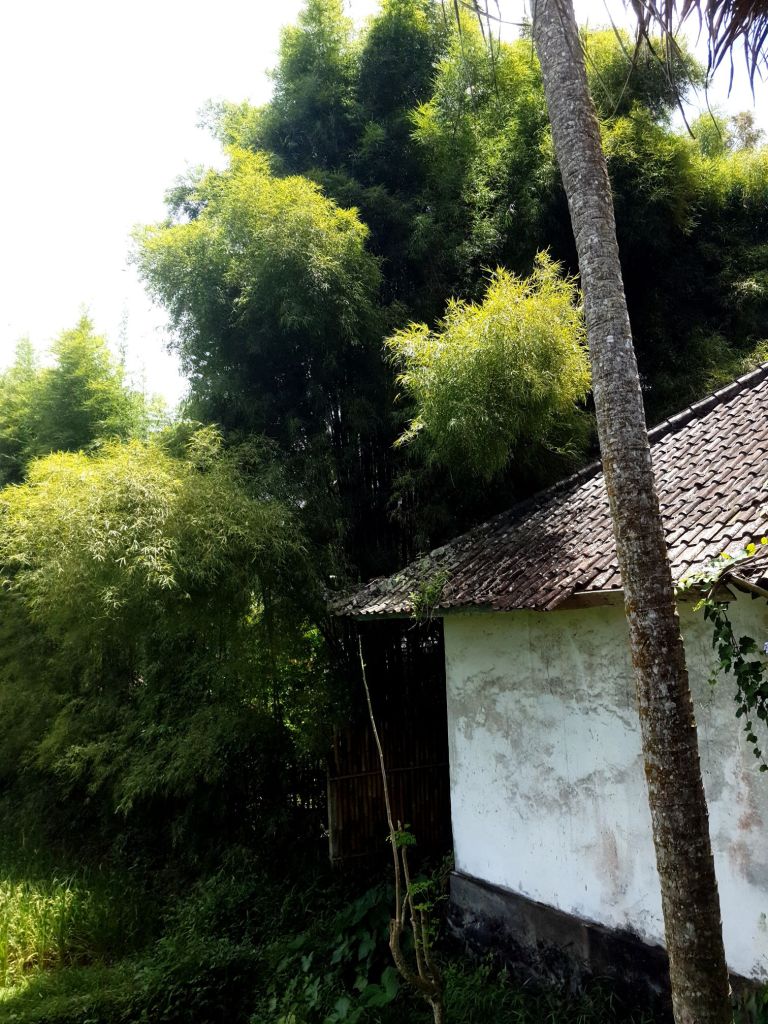
    A man, feeling discouraged in the world having neither achieved his goals or changed, sought out his mentor. The mentor asked him, “How long does it take for the giant bamboo to grow as tall as a building? During the first year the small shoot is watered and fertilised and nothing happens. In the second year the shoot is watered and fertilised some more, another year has passed. And another. And still nothing happens. Then on the fifth year, it shoots up to the sky. In six weeks the bamboo grows over 30m tall. So how long does it take for the bamboo to grow so high?”.

    “Six weeks”, the man replied.

    “That is your mistake”, said the mentor, “It takes five years. Had the shoot not been watered or fertilised at any point during those five years, it would have died. What was happening during all those years? Deep in the earth an enormous network of roots was developing to support the bamboo’s sudden growth. Growth takes patience and perseverance. Every drop of water made a difference. Every step you take makes an impact. You may not see the change right away but growth is happening.”

    At first read I found this parable to hold a lot of wisdom in patience and nurturing in the present moment, however when I went back in for another read I felt it missed the point that success is illusory, why would a master be leading this man astray? This was, until I reflected on how this parable is commonly portrayed on the internet; as a motivational speech designed as a call to action – do something, now! Be someone, now! Read more books to make you more knowledgeable. Sign up to more courses to make you better at your job. All this reads as you are not good enough as you are, you need to do better, only then will you be successful.

    I would imagine that the master in this story is either a Daoist or a Zen Buddhist and whilst there is no direct reference to the need to be successful, this is what is commonly construed. What is perhaps not taken note of is the reference to nature; why speak about bamboo when the master could have referred to his own “success” or the success of a King or businessman? Perhaps it is because in nature there is no striving, there is no need to monopolise for the sake of it and there is no need to set yourself apart from others, there is only harmony and balance, and this message I feel has been lost. From watching nature we can observe that only the present moment exists. As I water and tend to the veggies in the allotment I don’t witness them having existential crises about not producing enough flowers or having too long a stem, so from this I can deduce that the illusion of success can only arise from a mind capable of projecting into the future and the past, taking us away from the moment that is now. The more time I have spent being aware of my mind and practicing meditation I have noticed how the majority of my desires for success have sloughed away and I become more at one with the courgettes.

    Another misconception that I wish to draw attention to is that this parable only references one person making success happen for him; the one watering and nurturing the plant. Whilst we are responsible for turning up in the present moment and nurturing it, we are not single-handedly responsible for the abundance acquired. A whole host of conditions and influences are involved in the lead up to the moments that seem like success has been achieved. Again I believe that in this parable the master does not differentiate between the bamboo and the person caring for it, they are one and the same. It is our thinking mind, the ego, that involves a strong sense of “I” and individuality, yet the “I” is not separate from its environment, it is of it.

    What are your thoughts on this parable? Do you feel this is a full reflection on success?

    I must admit this topic was difficult to write about as it stirred up a desire in me for this post to be a success! In turn this made me doubt and question all that I wrote and there was much more I wanted to comment on. I had been very aware of the anxiety and stress building inside as my mind became more and more unsettled that when I was able to return to the present moment, it was so joyful and stress free that I didn’t feel the need to do anything, be anyone or convey anything. However, I hope this was helpful to at least one person so that you can allow yourself the moment to step back and breathe and realise you are fine just as you are. There is nothing to strive for, you can be abundant by just existing in the present moment.

    If you enjoyed this blog then please click the “Like” button, share it with your friends and drop a comment below letting me know what other topics you’d like me to write about. Thank you as always for taking the time to read my blog, I appreciate each and every one of you.

  • The Perfection of Giving in Buddhism

    In Buddhism we can find advice on how to live a noble life as we embark on a path towards enlightenment. Regardless of your belief system these teachings can assist in bringing clarity towards your intentions and actions in life and can aid in shifting delusion, ill will and greed by stepping away from egocentric practices. Through this focus one can generate greater compassion and an appreciation for life “as it comes” rather than as “it should be”.

    The Buddha talked about Dana (The Perfection of Giving) in relation to the teaching of ‘The Six Paramitas’ or ‘The Six Perfections of Character’ (there are 10 listed in Theravadan Buddhism). The Six Paramitas are the perfection of giving, morality (proper conduct), patience (or tolerance), effort, meditation and wisdom (or discernment) and are to be cultivated if we wish to move away from suffering towards peacefulness and happiness.

    Dana : The Generosity of Giving

    The Perfection of Giving is considered to be one of the first Paramitas to be developed as it develops the skill of metta (loving-kindness). As we develop greater metta we awaken our hearts furthering unconditional giving and selflessness. It is important to highlight that being the giver and being the receiver are of equal importance in this interaction. The Western awkwardness of “politely” rejecting gifts whether they be material, time, money or work, does not allow for a harmonised experience of giving and receiving. This conditioning of politeness can show us how far our conditioning can throw us from peaceful living. By denying a person the opportunity to give, we deny them the joy of giving and developing their metta further.

    Giving and receiving arise as one, you cannot give without having a receiver and you cannot receive without having a giver so both sides must be respected in equal measure.

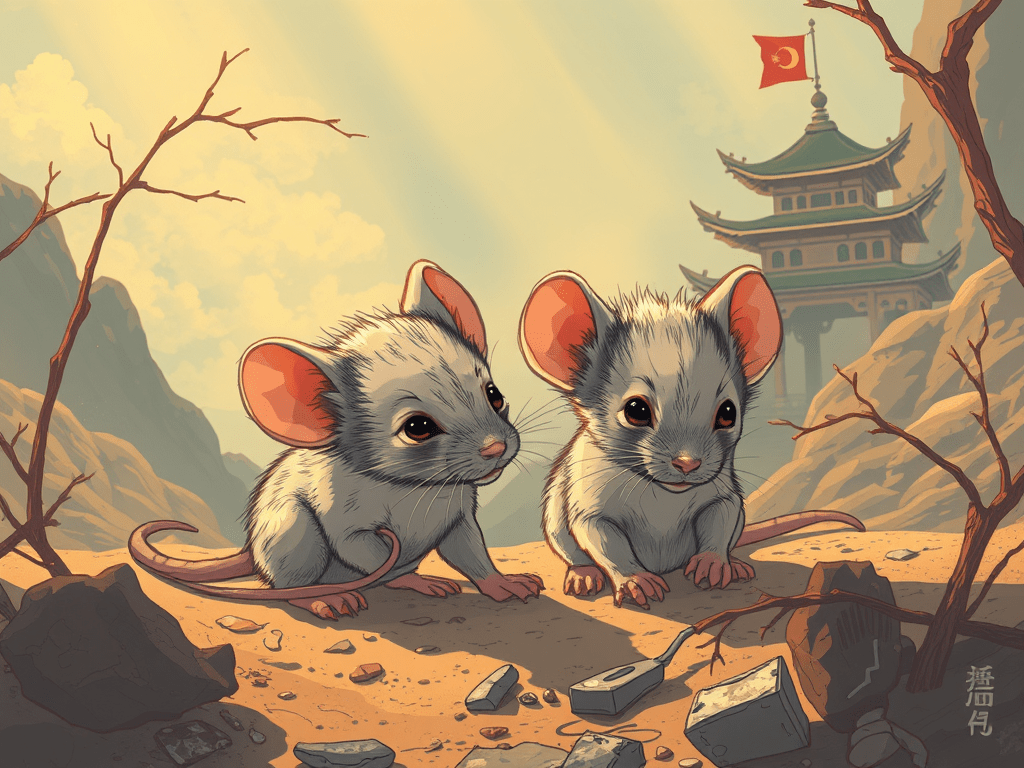
    A personal experience of caring and rearing two wild-born black rats from the age of 1-week old to 6-weeks provided me with my first taste of selfless giving. In their pure innocence and vulnerability of needing to be cared for in order to survive, they gave me my first real taste of selflessness and the pureness and joy of giving.

    To be accomplished in The Generosity of Giving can be expected like so:

    “What is accomplishment in generosity? Here, a noble disciple dwells at home with a mind free from the stain of miserliness, freely generous, open-handed, delighting in relinquishment, devoted to charity, delighting in giving and sharing. This is called accomplishment in generosity.” 

    AN 4:61, NDB 450

    The Eight Reasons For Giving

    The Buddha mentions eight reasons that we may give a gift and these eight reasons can be interpreted as moving from lower levels of awareness filled with greed, delusion and hatred towards higher levels of awareness that bring us closer to our enlightened selves. These are as follows:

    1. One gives a gift from desire.

    2. One gives a gift from hatred.

    3. One gives a gift from delusion.

    4. One gives a gift from fear.

    5. One gives a gift based in mental conditioning and obligation, thinking, ‘Giving was practiced before by my father and forefathers; I should not abandon this ancient family custom’.

    6. One gives a gift in consideration of good kamma in the next life, thinking: ‘Having given this gift, with the breakup of the body, after death, I will be reborn in a good destination, in a heavenly world

    7. One gives a gift for the purpose of joy, thinking: ‘When I am giving this gift my mind becomes placid, and elation and joy arise.’

    8. One gives a gift for the purpose of ornamenting or beautifying the mind and increasing the skill of metta.

    As you move down the list of reasons for giving, the giver becomes less and less identified with themselves as an individual needing to accomplish something in life and more in tune with the wholesomeness of the practice where the giver and receiver are one. As we develop this practice we move away from expecting outcomes from our gift giving realising that the act of giving is to let go of the ego rather than to fuel it further.

    The next time you find yourself involved in the act of giving, give yourself the opportunity to reflect before, during and after on the above points. Perhaps you can identify the intention behind your gift giving based on one or more of the points. Where possible avoid rational thinking and reasoning from taking charge and instead be aware that this action is resulting in mental proliferation (trying to “figure it all out”). Be aware that the act of giving felt like this and trust in the present moment awareness where no action is needed to be taken and the awareness itself is all that’s needed.

    If you found this to be helpful or of interest please like, subscribe and share and drop a comment down below and thank you for taking the time to read!

  • Understanding Death: A Journey Through Eastern and Western Views

    Understanding Death: A Journey Through Eastern and Western Views

    Around 3 weeks ago I found two, wild, rat kittens lying on a path whilst birds swooped down and pecked at them, not to eat but to eliminate a perceived threat.  It was apparent that the modeling of these particular bird brains did not allow them to discern the different levels of threat between a baby and adult rat, only that all rats are a threat.  At first I couldn’t make out what lay on the path, I walked over to find a little body laying there with eyes still firmly closed and a cut to the side of it’s abdomen in the shape of a bird peak.  I instinctively picked him up. A little way to the side lay his brother with a bigger cut to his head.  I carried them around in my hands for a while, attempting to keep them warm whilst trying to decipher where they’d come from and was there any possibility of returning them to their nest.  With the threat of birds overhead it wasn’t feasible to leave them on the path for their mother to retrieve them.  Unfortunately no nest could be located so I took them in and spent the next two weeks nursing them first with baby formula and then gradually weaning them onto solid foods.  Gradually their eyes and ears opened and they began exploring their purpose-built cage to house them until they were old enough to be released back into the wild.  What I found most surprising was the distance and speed they moved at when still totally blind, as though they were simply too impatient to wait for their eyes to open and would get on with exploring anyhow.  Perhaps they were precocious learners.

    At the 3 week mark, it seemed like we had made it. They were fully weaned, growing in size, and were far more balanced with their movements. And yet, Pip’s breathing had changed.  Each time he breathed in he produced a clicking sound and his breathing rate was ever so fast.  He had pulled himself out of his nest box one morning and was laying in what I would have considered too exposed an area for a rat and everything about his behaviour was muted and diminished.  By the late afternoon he had passed away.

    I had the rare opportunity of holding him in my hands during the final couple of hours. I witnessed the transition from life into death. This experience raised several questions in myself both during and after the event.  Would it be right to interfere with the process and take him to a vet to “save” his life?  What is the relevance of his body once he’s died and where is “he” now?

    Should I have attempted to “save” Pip with medical intervention?

    The answer to this question depends very much on which culture you have been raised in. It also depends on what your belief system is.  For simplicity’s sake, I will define the West as containing the Christian, Muslim, and Judaism faiths. The East includes Buddhism, Taoism, Hinduism, Jainism, etc.

    The Western faiths believe that there is only one life. Once you die, you head either to heaven or hell. This belief gives you two options of living. You can make the most of it, as time is running out. Alternatively, you can rely on Heaven as the ultimate goal. It is viewed as an everlasting life. This makes what happens on Earth seem irrelevant.  The East believes something very different. They believe you have infinite lives. You are constantly reborn once one life has ended. This cycle continues to increase your level of consciousness until you reach enlightenment and return to the Source.  In the West, religion has been steadily declining. What’s interesting is that even if you’re an atheist with a strong disdain for religion, you have been socially conditioned. You still believe there is only one life. This is because religion is so deeply embedded in our societies.  This permeates deeply through all levels of our behaviour, so imagine how differently you might behave if you not only believed but knew that your life force/energy/soul was brought back into a living body after each death.  Perhaps life wouldn’t be such a rush to reach the top, feeling like time was always running out; perhaps you wouldn’t be filled with anxiety of having to achieve things earlier in life in order to have time and money to enjoy and experience things as you age.  What about your job? What about your body? Think about your responsibilities. How do these all change when you consider that perhaps there isn’t one life only for each of us? #YOLO (You Only Live Once) sounds like a pretty ridiculous handle but an unfortunate representation of how people can and do behave with that belief system.  For those unfamiliar with #YOLO, it is an abbreviation used for behaving recklessly under the assumption that you only live once so should make the most out of life, whether it’s binge drinking and drug sessions, unprotected sex, dangerous stunts, you get the drift.

    Osho very succinctly puts into words our Western social conditioning on death.

    “We have been taught for centuries that death is against life, that death is the enemy of life, that death is the end of life.  Of course, we are scared and cannot relax, cannot be in a let-go.  And if you cannot be in a let-go with death, you will remain tense in your life, because death is not separate from life.”

    To speak of death in the West in terms other than how to increase longevity and achieve immortality is seen as taboo, perverse, religious or spiritual nonsense or farcical, such is the fear and lack of understanding of it.  My experience with Pip and my own personal exploration into Eastern philosophy and the Buddhist understanding of the mind has led me to question the truth of a “one life only” paradigm.  At this stage I am still full of questions and so the idea that your life force is reseeded in another body is still something to be further explored, to find my own understanding and experience this for myself by way of meditation, yet I have a strong sense of knowing that I’m on the right path.

    My exploration into all of this led me onto something really interesting on how we have been socially conditioned to believe in either one life or many.

    Jesus, Mohammed, Buddha, Krishna, etc.  were all great teachers of their times and the manner in which they shared their teachings was dependent upon the social behaviours of their societies in their eras and regions.  It’s worth noting that religions did not attach themselves to their teachings until after their deaths, in the case of Buddha, some 500 years after his death and one should therefore be careful not to confuse religious dogma and agenda with the pure teachings of these men.  In the case of the Eastern teachers they had known for thousands of years that reincarnation was true, it wasn’t only a theory that was taught but had anecdotal evidence to support it.  Jesus and Moses were known to have traveled to India and would have therefore come across these teachings and evidence and yet upon their return to the West they didn’t share this with their disciples.  The reason was that they had noted how the theory of reincarnation had made the Indians very lethargic in life; when you know you will have multiple lives, what is the rush in doing anything.  This wasn’t the case though when Buddha and Krishna originally shared their teachings hundreds of years previously, in fact, India was a rich country then with very bored people, so they painted a picture of having to live with the same boredom life after life, whipping people into shape and encouraging them to pursue meditation and enlightenment.  But then India entered into a period of poverty, still grasping on the theory of reincarnation, they now found themselves hoping for an escape in their next life.  This life hasn’t worked out, maybe the next one will.   This escapism resulted in avoidance of living to the fullest and the postponement of living.  Jesus and Moses saw this and realised the strategy was no longer working, so on their return to the West they shared a different story, one where you only have one life so if you want to enlighten, if you want to meditate, do it now, don’t put it off till tomorrow, time is ticking.  And it is through this mechanism that the West has now become pathological with it’s concept of time and linear living.  Just like with Buddha and Krishna, Jesus, Mohammed and Moses’ teachings worked for the era that they lived but there comes a time when the framework of society shifts and holding onto old teachings can be detrimental.  It is for this reason that you shouldn’t accept any belief you hold without having first questioned it fully.

    To take this back to the question then of whether medical intervention was necessary depends, partly, on how strongly you believe in one life vs many.  In the West it seems now more than ever that we cannot accept that people die, everyone must be saved and strong, violence-based terms are used to combat, attack, fight, destroy illnesses or diseases as though death is the enemy rather than a natural process.  It is as though people have forgotten that we are nature and nature can end this life at any time.  As such, people are not dying naturally at home like they might have done only some 150 years ago but instead make frequent hospital trips for intensive and extensive treatment up to the day they die.  Personally this sounds incredibly stressful and a fight to avoid death means  fear will hold strong in those final moments, dying at home or in nature is the way I want to go.

    I recall a news report a few years back in Australia of a young man who died as a result of a shark attack when he was out surfing.  As he was sat on his board with his legs dangling over the sides, a sizeable shark bit his legs.  His friends around him went to grab him and pull him ashore and uncharacteristically the shark didn’t let go as they normally would when making an error in food source.  There was a tug of war and eventually the shark swam off, leaving the friends to pull the young man ashore.  On the beach it was evident he’d lost at least one of his legs and was bleeding profusely. All of this sounds horrific, like a scene of out Jaws (a film that plays our your fear of dying violently) and yet his friends recounted that he was totally calm and asked that they pass along his love to his loved ones before dying.  It was highly likely that his body had responded to the shock of the attack preventing him from feeling pain and allowing him to peacefully move on which in one sense was perfect.  It was those that had witnessed the event that most likely suffered the worst of it and without the wisdom of an elder it will only reinforce that death is something to be feared.

    I should probably make it clear that I do believe in medical intervention, however there is a fine line between knowing when to let go and when you are simply avoiding dying out of fear of death and I think the ease of finding this line can only be put down to how enlightened both the person dying is as well as the person caring for them.  Having said this if you live a life close to nature following it’s natural rhythms with a healthy attitude towards death, there shouldn’t be too much opportunity for medical intervention as you lead a life of preventative care.

    Does your body make you you?

    Imagine for a moment that the essence, the life force, the soul, whichever term you feel is relevant, of your loved one was moved out of their body and into another and into their body was placed another life force.  Which body would you feel that same connection to, would it be the body that looks like them, or the body that contains their energy, their personality, behavioural patterns etc?

    In the process of Pip passing away in my hands, his breathing became slower and slower until finally he breathed in but didn’t breathe out again.  Almost instantly he became unrecognisable, something drastically had changed and yet all the identifiable features of his body remained.  The scar of the bird beak on his head was still there.  Yet after that moment of dying his body was that of any rat which lead me to truly knowing that his body wasn’t HIM, it was merely a meat suit or a shell that housed his true essence.  What that true essence is though I know only to describe as his energy force which vibrated at a specific frequency, a fingerprint unique to him.

    On a basic level your body is little more than an assimilation of memory based around the framework of a genetic blueprint heralding back from all your ancestors and evolutionary history (more than a few terabytes of data there.) As you operate your body through life it picks up more memory through the environments you expose it to, the substances it consumes, the knowledge it acquires and then should you have offspring, this memory is passed on through genetics.  I am not suggesting that you should disregard your body as little more than a vessel, in fact, I am of the view that the body should be well looked after with and understanding of how to maintain homeostatic internal process through allostasis and that through doing this you can use your body to further your process of enlightenment, however it is not to believe that your body IS you.

    So if your body doesn’t make you you, then what does and if you’ve spent your life defining yourself by your appearance how will this affect you?

    This requires an even deeper dive into a fundamental understanding of the mind and the Eastern philosophies that I shall perhaps cover in another blog if anyone is interested.  However if I mention something in short, it would be that the ultimate goal is to achieve enlightenment, in doing so you free yourself from the Earthly realm.  To go about achieving enlightenment is to basically work through your issues.  Every single thing you think you know about yourself needs to be overturned and examined and by doing this you slowly rid yourself of your conditioned beliefs, your angry outbursts, your patterns of cheating on your partner, your need to consume alcohol to get through life etc.  Every time you rid yourself of one of these patterns you’ve taken a step closer to enlightenment.  My understanding is that during each lifetime, you work through as much as you can and when you’re reborn in your next life you start from where you left off.  Therefore if you spend a lifetime believing you are your body you have in one sense wasted a life and will be born at the same level of consciousness that you died, finding yourself in an endless loop of suffering.

    And so I find that little Pip who only graced my life for two short weeks has helped me shape my views on dying and living, perhaps I’ll meet him again.

    This blog is not force you to believe anything different to what you already know and understand but to have you question those beliefs and to question how you’ve come to believe what you believe –  has it been through personal enquiry or because “that’s what I’ve always known”, and therefore, social conditioning?

    “It’s an absolute certain fact that people die, animals die, trees die, birds die.  How can you avoid the fact that you are also going to die – maybe tomorrow, maybe the day after tomorrow?  It is only a question of time.  But still, those who are aware of their being know that nobody dies.  Death is an illusion”.  Osho, Death: The Greatest Fiction.

    Thank you for taking the time to read my blog.  If you found it interesting, please like and subscribe and drop a comment below too as it helps the algorithm immensely.